
News & media
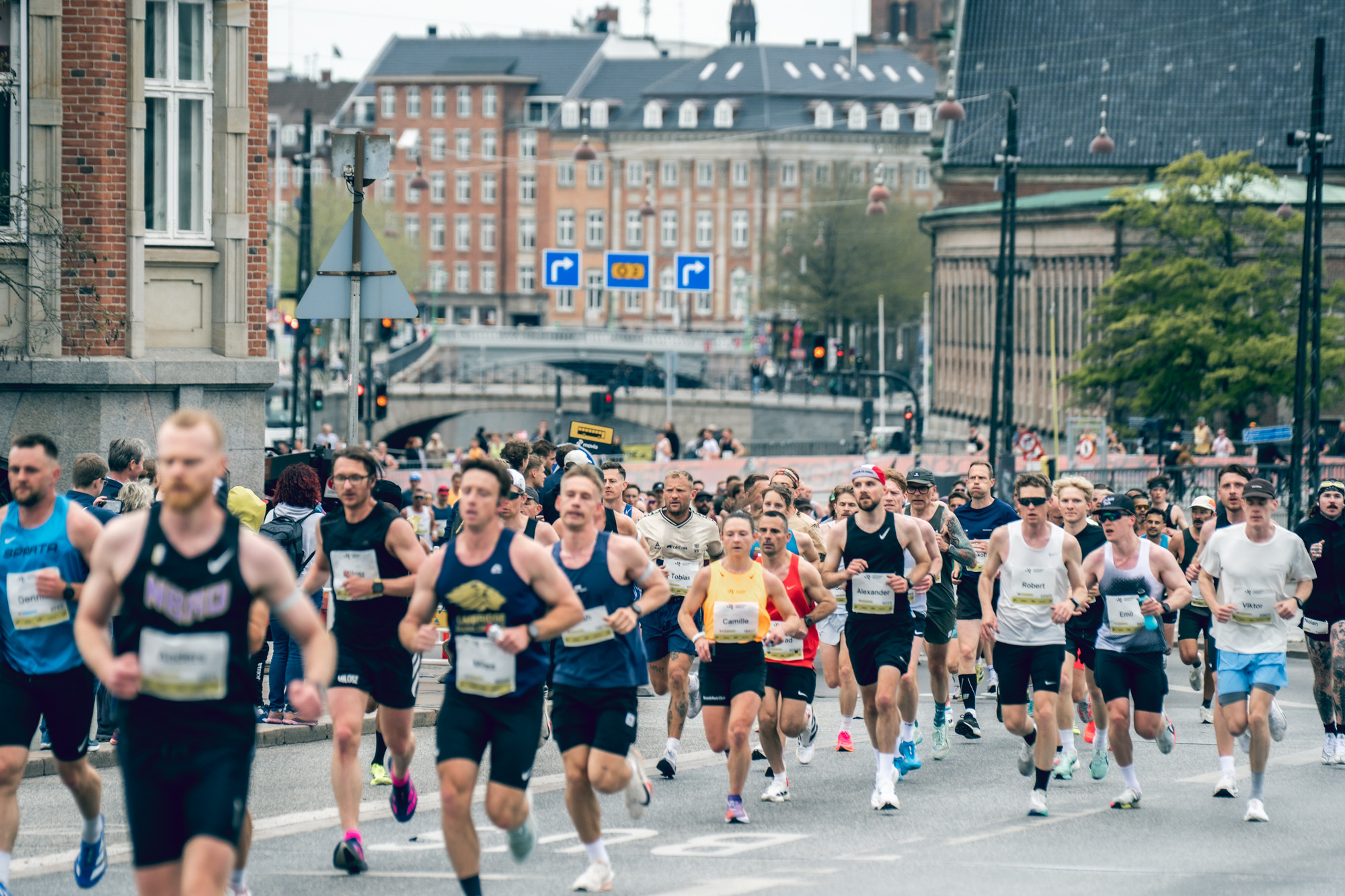
Copenhagen: a breakthrough moment in the European Marathon Classics
The Copenhagen Marathon marked the fifth marathon of this year’s European Marathon Classics series, delivered a race built on control, timing and decisive breakthroughs, both at the elite level and across the mass field.
The Copenhagen Marathon was a race rich in atmosphere and emotion, a run through one of Europe’s most elegant capitals, where wide boulevards, waterfront stretches and tightly packed streets created a continuous dialogue between runners and the city.
It was a day carried by energy, by spectators lining the course, and by a sense of momentum that built kilometre after kilometre, a marathon Copenhagen had never seen before.
A debut that turned into history
The women’s race evolved from early ambition into a demonstration of patience and execution. The leading group set a strong tempo from the outset, passing 10 km in 32:23 and halfway in 1:09:21.
But the decisive move came from behind. Mercy Chebwogen, making her marathon debut, ran her own race, controlled, composed and detached from the early pace. Nearly a minute behind at halfway, she gradually closed the gap, moving through the field with quiet precision. At 28 km she reached the leaders. Shortly after, she left them behind.
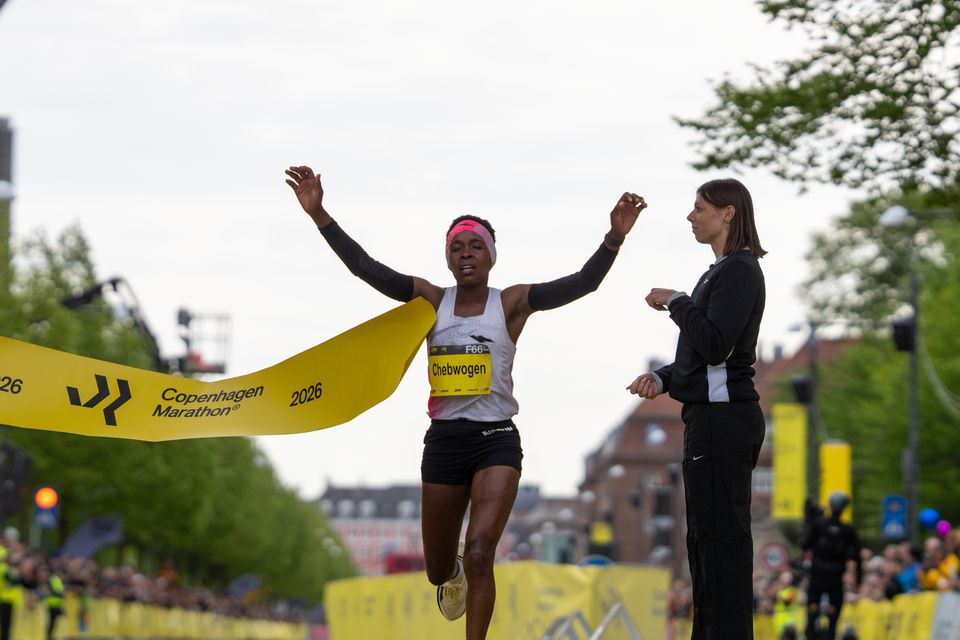
By 35 km, the race belonged to her. She crossed the line in 2:22:08, breaking the course record by more than a minute and setting a new Danish All-Comers’ Record, a performance built not on impulse, but on belief and timing. A breakthrough that reflects what the European Marathon Classics series represents: space for new stories, new names and new milestones.
Tigist Gashaw and Fantu Shugi completed a podium shaped by early intensity and late-race reality.
Women’s results
- Mercy Chebwogen (KEN) – 2:22:08 (course record)
- Tigist Gashaw (BRN) – 2:23:07
- Fantu Shugi (ETH) – 2:24:38
A finish decided by seconds
The men’s race carried a different tension; one built on proximity and patience. A group of seven athletes remained together through 30 km, the pace steady, the outcome open.
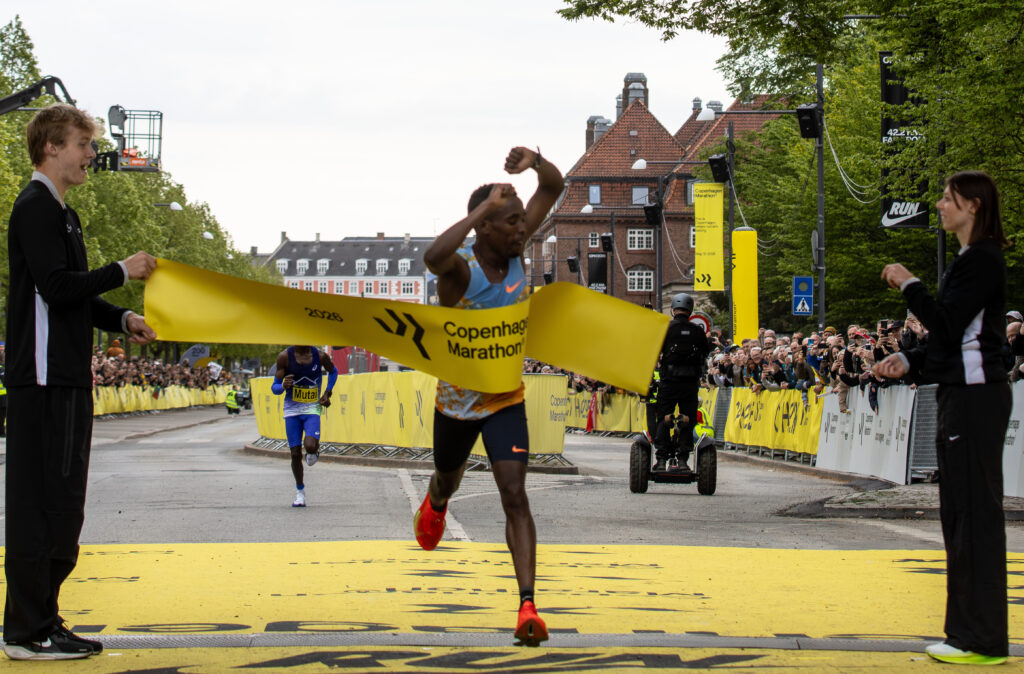
In the final kilometres, the race compressed into a direct contest. Tadesse Kassa, just 22 years old, found the strength to separate himself when it mattered most. In a tightly fought finish, he secured victory in 2:08:26, only five seconds shy of the course record. Vincent Mutai followed in 2:08:30, once again second, while Dejene Weyfen completed the podium in 2:09:14.
Men’s results
- Tadesse Kassa (ETH) – 2:08:26
- Vincent Mutai (KEN) – 2:08:30
- Dejene Weyfen (ETH) – 2:09:14
A city moving as one
Beyond the elite races, Copenhagen confirmed something deeper, the power of participation at scale. With 22,424 runners, it became the largest marathon ever held in Denmark, a reflection of a city fully engaged in movement.
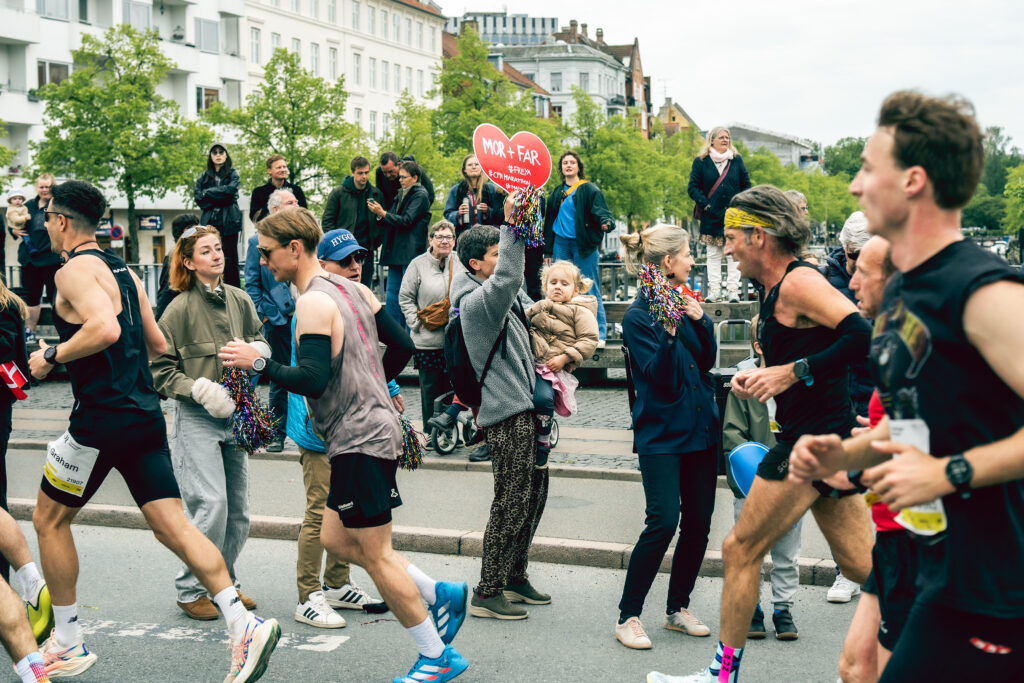
Here, the European Marathon Classics idea of Run Europe, Go Beyond Borders takes its most tangible form. Not only in elite competition, but in thousands of individual journeys. Runners arriving from different countries, backgrounds and motivations, yet sharing the same streets, the same distance, the same finish line.
Performances such as Omar Hassan’s 9th place and personal best (2:12:20), alongside national champions Valdemar Meiling (2:18:32) and Luna Andrea Paltorp (2:36:56), added further depth to a race where elite and mass participation coexist naturally.
Beyond borders, through cities
Copenhagen does not rely on extremes. Its strength lies in flow, in how the race integrates into the city, and how the city responds. As the fifth stop in this year’s European Marathon Classics series, it reinforced a broader narrative: that running in Europe is not confined to one place, one style or one moment. It is a continuous movement across borders, connecting cities through shared experience.
Next stop: Warsaw
The journey goes on, eastwards, to the Warsaw Marathon on 27 September, another opportunity to run through a European capital, to experience a different rhythm, a different crowd, a different story.